Course Description
Senior Instructor
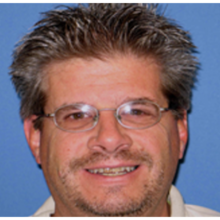
Bob Cochrane
I have been teaching at Tri-C for 15+ years and achieved tenure. I am the Metro Campus Faculty Coordinator for our new Sport & Exercise Studies Degree Program and a member of the P.E. faculty at Metro.I attended Lakewood High School and received my undergraduate degree from Bowling Green State University, majoring in Health Education. I then went to the University of Arizona to complete my graduate degree in Physical Education with a specialty in Athletic Training. I was a certified athletic trainer for 21+ years. I was the first Certified Athletic Trainer at St. Ambrose College in Davenport, IA. I then moved on to a Division 1 job at Northern Illinois University where I served as the Assistant Athletic Trainer for 3 years and then served as the Head Athletic Trainer for 3 years. During my tenure at Northern Illinois University, I served as the chair of the P.A.W.S. Program, (Providing Athletes With Support.) This initiative was a wellness program focused on the well-being of our intercollegiate student-athletes. Following my stay at NIU, I decided the travel was too much and the pay was too low, so I moved back to the Cleveland area to continue my work as an athletic trainer. I worked at Hawken School and Bay Village H.S. and headed up the athletic trainer outreach program for SportsHealth at Lutheran Hospital. I was on the hospital employee health and wellness committee and oversaw the day-to-day operations of our center in addition to my athletic trainer responsibilities. Following a change of ownership at the hospital, I began my career at CCC.Most importantly, I live south of Cleveland in Summit County with my wife (Robin) and stepson (Corbin's biological dad died when Corb's was 3.) Corbin will be 28 in August and has a genetic disorder known as Angelman syndrome. AS is a deletion in the 15th chromosome. If you were to meet "Corbs", you might think he had autism or cerebral palsy. He cannot talk, he is prone to seizures (controlled now with meds), sleep disorders, developmental and physically delayed, LOVES WATER!!! and always has a smile on his face. Corbin went to prom two years ago, graduated from Stow High School and made us the proudest parents on earth. He is now in an adult day program and loves it! He will live with us for the rest of our lives because he requires assistance with all daily duties. Robin and I started a not-for-profit organization 12 years ago to benefit other "Angel" families in the area.
Course curriculum
-
1
Benefits of Flexibility Training
-
Flexibility Training - Benefits of Flexibility Training
-
-
2
Physiology of Stretching
-
Flexibility Training - Section 1: Physiology of Stretching
-
Flexibility Training - Section: 1.3 Connective Tissue
-
Flexibility Training - Section: 1.4 Cooperating Muscle Groups
-
Flexibility Training - Section 1.5 Types of Muscle Contractions
-
Flexibility Training - Section: 1.6 What Happens When You Stretch
-
Flexibility Training - Section: 1.6.1 Proprioceptors
-
Flexibility Training - Section: 1.6.2 The Stretch Reflex
-
Flexibility Training - Section: 1.6.3 The Lengthening Reaction
-
-
3
Flexibility
-
Flexibility Training - Section 2 Flexibility
-
Flexibility Training - Section: 2.1 Types of Flexibility
-
Flexibility Training - Section 2.2 Factors Limiting Flexibility
-
Flexibility Training - Section 2.2.1 How Connective Tissue Affects Flexibility
-
Flexibility Training - Section 2.2.2 How Aging Affects Flexibility
-
Flexibility Training - Section: 2.3 Strength and Flexibility
-
Flexibility Training - Section 2.3.2 Why Contortionists Should Strengthen
-
Flexibility Training - Section 2.4 Overflexibility
-
-
4
Types of Stretching
-
Flexibility Training - Section 3 Types of Stretching
-
Flexibility Training - Section 3.1 Ballistic Stretching
-
Flexibility Training - Section 3.2 Dynamic Stretching
-
Flexibility Training - Sample Dynamic Stretching Videos
-
Flexibility Training - Section 3.3 Active Stretching
-
Flexibility Training - Section 3.4 Passive Stretching
-
Flexibility Training - Section 3.5 Static Stretching
-
Flexibility Training - Section 3.6 Isometric Stretching
-
Flexibility Training - Section 3.6.1 How Isometric Stretching Works
-
Flexibility Training - Section: 3.7 PNF Stretching
-
Flexibility Training - Section 3.7.1 How PNF Stretching Works
-
Flexibility Training - Sample PNF Videos
-
-
5
How to Stretch
-
Flexibility Training - Section 4 How to Stretch
-
Flexibility Training - Section 4.1 Warming Up
-
Flexibility Training - Section 4.1.1 General Warm-Up
-
Flexibility Training - Section 4.1.2 Warm-Up Stretching
-
Flexibility Training - Section 4.1.3 Sport-Specific Activity
-
Flexibility Training - Section 4.2 Cooling Down
-
Flexibility Training - Section 4.3 Massage
-
Flexibility Training - Section 4.4 Elements of a Good Stretch
-
Flexibility Training - Section 4.5 Some Risky Stretches
-
Flexibility Training - Section 4.6 Duration, Counting, and Repetition
-
Flexibility Training - Section 4.7 Breathing During Stretching
-
Flexibility Training - Section 4.8 Exercise Order
-
Flexibility Training - Section 4.9 When to Stretch
-
Flexibility Training - Section: 4.10 Stretching With a Partner
-
Flexibility Training - Section 4.11 Stretching to Increase Flexibility
-
Flexibility Training - Section 4.12 Pain and Discomfort
-
Flexibility Training - Section 4.12.3 Overstretching
-
-
6
Normal Joint Ranges of Motion
-
Flexibility Training - Normal Joint ROM - Neck
-
Flexibility Training - Normal Joint ROM - Lumbar Spine
-
Flexibility Training - Normal Joint ROM – Shoulder
-
Flexibility Training - Normal Joint ROM – Elbow
-
Flexibility Training - Normal Joint ROM – Wrist
-
Flexibility Training - Normal Joint ROM – Hip
-
Flexibility Training - Normal Joint ROM – Knee
-
Flexibility Training - Normal Joint ROM – Ankle
-